Antioxidant and anti-urolithiatic potential of Bryophyllum pinnatum leaf extract against calcium oxalate crystal nucleation: In vitro and toxicological evaluation
DOI:
https://doi.org/10.5530/fpi.2.1.6Keywords:
B. pinnatum, Urolithiasis, Calcium oxalate crystal, Anti-urolithiatic activity, Antioxidant activity, Nucleation assay, PhytochemicalsAbstract
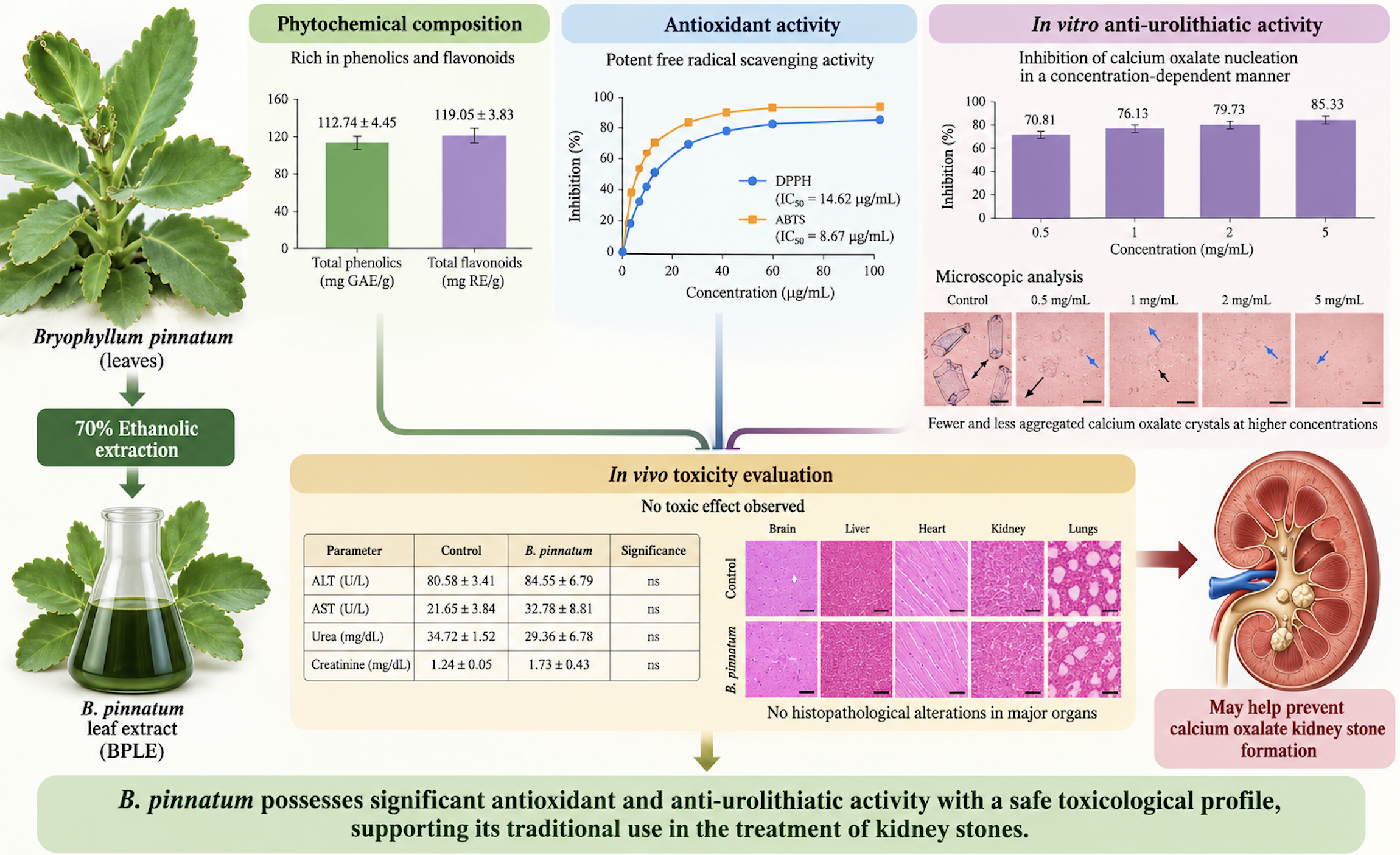
Urolithiasis is a common urinary disorder in which kidney stones form as a result of supersaturation of minerals such as calcium and oxalate. The present study evaluated the phytochemical composition, antioxidant capacity and in vitro anti-urolithiatic activity of Bryophyllum pinnatum. A 70% ethanolic leaf extract was subjected to phytochemical screening, antioxidant assays, in vitro calcium oxalate nucleation assay and in vivo toxicity evaluation. The extract was rich in phenolics (112.74 ± 4.45 mg GAE/g), flavonoids (119.05 ± 3.83 mg RE/g) and scavenged free radicals in a concentration-dependent manner, with IC50 values of 14.62 µg/mL (DPPH) and 8.67 µg/mL (ABTS). Inhibition of calcium oxalate nucleation increased with concentration, approximately 70.81% at 0.5 mg/mL, 76.13% at 1 mg/mL, 79.73% at 2 mg/mL and 85.33% at 5 mg/mL. Qualitative microscopic analysis confirmed fewer and less aggregated crystals at the higher concentrations. In vivo toxicity study revealed a non-toxic effect of B. pinnatum plant extract evidence from the biochemical and histopathology study. These findings collaboratively provide a preliminary evidence of B. pinnatum possesses antioxidant and anti-urolithiatic activity consistent with its traditional use in the treatment of kidney stones.
Downloads