Enhanced micronutrient management in rice and maize through nitrogen-doped zinc oxide nanoparticles
DOI:
https://doi.org/10.5530/jam.5.2.7Keywords:
Nitrogen-doped ZnO nanoparticles, zinc deficiency, nanofertilizer, rice, maize, micronutrient management, sustainable agricultureAbstract
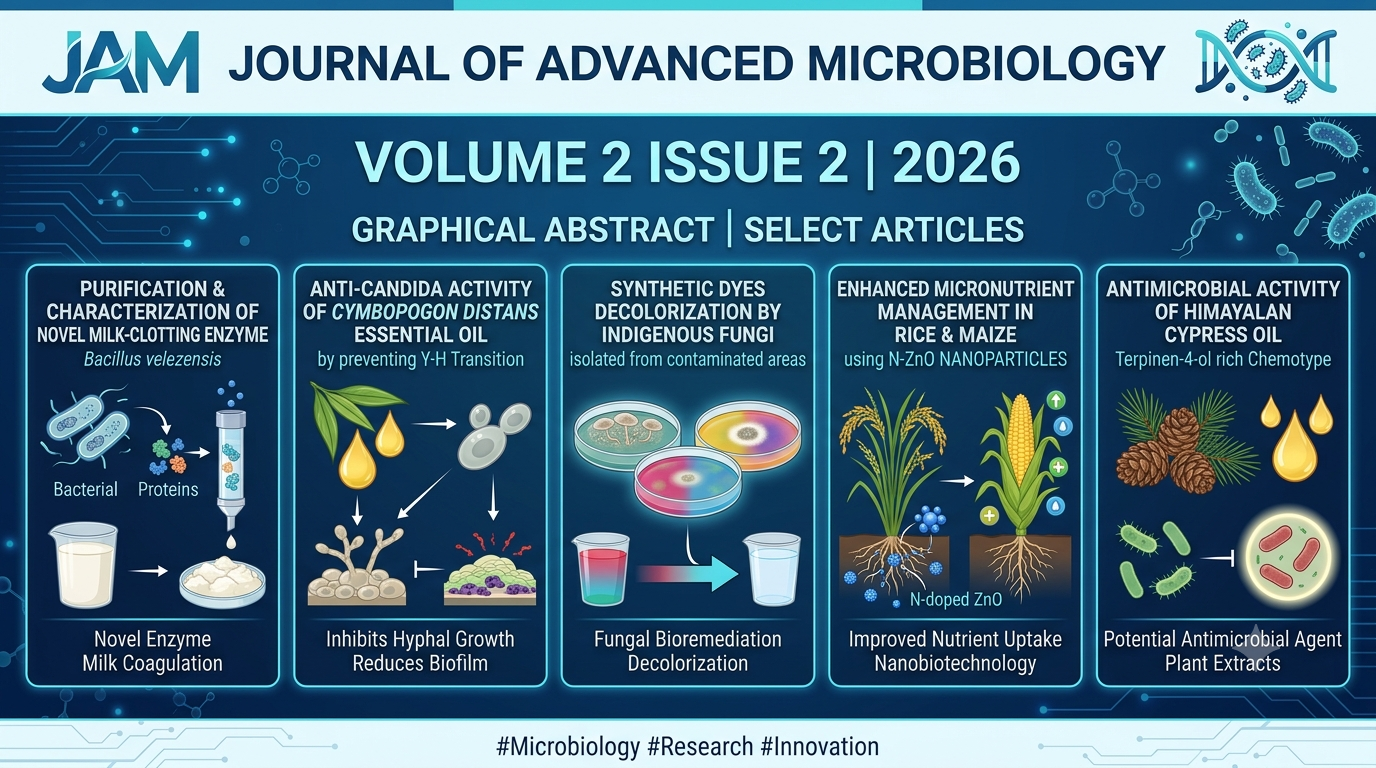
Zinc (Zn) deficiency is a major limitation affecting cereal productivity and nutritional quality worldwide, particularly in rice and maize cultivated under Zn-deficient soils. Conventional zinc fertilizers often exhibit poor nutrient use efficiency due to fixation, leaching, and limited bioavailability. Therefore, the present study aimed to synthesize and evaluate nitrogen-doped zinc oxide nanoparticles (N–ZnO NPs) as an efficient nanofertilizer for improving crop growth under zinc-deficient conditions. Nitrogen- doped ZnO nanoparticles were synthesized using an imidazole-based precursor method followed by calcination at 900°C for 30 min. Scanning electron microscopy (SEM) analysis confirmed the formation of predominantly spherical nanoparticles with an average particle size of approximately 51 nm. The growth-promoting potential of N–ZnO nanoparticles was evaluated through a controlled pot experiment using rice (Oryza sativa L.) and maize (Zea mays L.) under nutrient-deficient conditions with Hoagland nutrient solution. Nanoparticles were applied at concentrations of 2, 5, and 10 ppm. Application of N–ZnO nanoparticles significantly enhanced shoot and root length, biomass accumulation, and chlorophyll content compared with zinc-deficient controls and undoped ZnO nanoparticles. The maximum growth response was observed at 10 ppm, indicating improved agronomic efficiency and bioavailability of N–ZnO nanoparticles under zinc-deficient conditions.Keywords: Nitrogen-doped ZnO nanoparticles, zinc deficiency, nanofertilizer, rice, maize, micronutrient management, sustainable agriculture.
Downloads
Downloads
Published
Issue
Section
License
Copyright (c) 2026 Jyoti Kumari, Vivek Shit, Arun Kumar Padhy, Vivek Kumar, Manoj Kumar (Author)

This work is licensed under a Creative Commons Attribution-NonCommercial-NoDerivatives 4.0 International License.